Ekantik Vartalap · Bhajan Marg

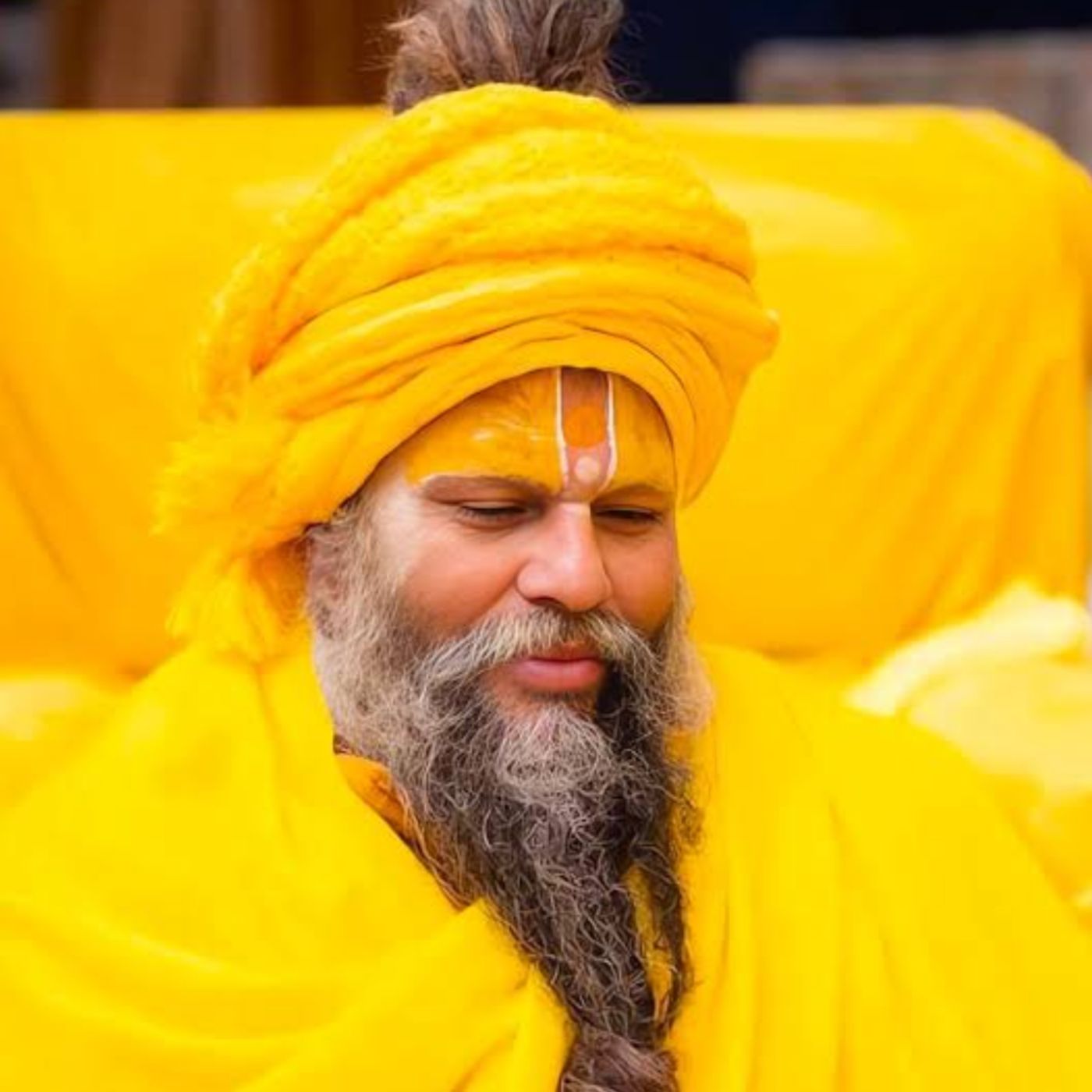
इस छोटी चीज से भगवान बहुत जल्दी प्रसन्न हो जाते हैं ! Shri Hit Premanand Govind Sharan Ji Maharaj

·35 min·3 clips
A devotee dances alone behind the temple, discovering how a small act can swiftly please God.
1. Ekantik Vartalap presents Shri Hit Premanand Govind Sharan Ji Maharaj delivering a satsang on devotional dance and Naradji's seven-part formula for overcoming worldly illusion. 2. Maharaj Ji is the sole speaker; the episode is a Hindi-language devotional discourse with Sanskrit verse citations and illustrative stories. 3. The episode's two core arguments are: first, that dancing for the Lord is a legitimate and powerful devotional practice endorsed by the greatest saints; second, that Naradji's seven prescriptions reveal that liberation depends on internal orientation, not external circumstances. 4. Maharaj Ji opens with the story of a devotee who tied ankle bells and danced alone behind a locked temple because he arrived late for the evening procession, using it to argue that dancing for the Lord requires no audience. 5. He cites Mahabhagavata Meera Ji who 'danced all night to please her Lord' and Tukaram Ji as examples of great saints whose devotional dance was genuine, contrasting them with those who dance publicly as performance. 6. He rebukes critics of devotional dance by listing the scriptural authorities who danced: Bhagwan Shankar (the supreme Gyani, who is called Nataraja), Shri Krishna dancing on Kaliya's head, Naradji, Prahlad Ji, and Shukadev Ji performing kirtan with instruments in the opening of Srimad Bhagavatam. 7. Maharaj Ji uses a rhetorical question to confront critics: 'Have you ever become a Vairagi or Gyani more than Sukhdevji? Have you never seen your face?' — implying that critics of bhakti have neither the path of knowledge nor devotion. 8. Transitioning to Naradji's verse, Maharaj Ji presents seven prescriptions from a Bhagavatam passage: abandoning bad company (kushang), serving Mahapurushas, abandoning mamata (possessiveness), serving vivikthi sthanam (solitude), uprooting lokabandh (worldly bonds), becoming nishtraya (beyond the three gunas), and abandoning yogakshema (dependence on the outcome of effort). 9. On the first prescription — avoiding kushang — Maharaj Ji identifies as kushang any gathering where the name, qualities, and leela of the Lord are not discussed, citing Bhagwan Shankar himself as someone who 'continuously chants Hari's name.' 10. Citing Pujyashri Swami Ram Shukda Ji Maharaj and Pujyashri Bhai Ji Maharaj, Maharaj Ji redefines 'vivikthi sthanam' (solitary place) as an internal state: a person absorbed in God-contemplation in a marketplace is in solitude, while a hermit thinking worldly thoughts in a cave is fully in the world. 11. He argues that 500 people in satsang with their minds directed toward Shyama Shyam are genuinely in solitude, because the shared aim transforms collective gathering into inner aloneness. 12. On 'yo lokabandh munmoolayati' — uprooting worldly bonds — Maharaj Ji teaches that the aspirant should identify only as 'Harijan, servant of the Lord' and refuse to introduce themselves by caste, family, or birth-place. 13. He illustrates this with a story about a judge who regularly attended a great teacher's satsang on Brahma Gyan and resolved to take sannyas 'as soon as my daughter is married' — only to arrange the marriage himself during the teaching, then fall back into the world. 14. A second story involves a disciple who returned to see his teacher with worldly attachment; the teacher's disciples asked him to leave immediately, saying 'we only fulfill the desire of our Gurudev' — and the teacher later explained the disciples came 'as sons, not as saints.' 15. Maharaj Ji references the relationship between Maa Sachi and Advaita Acharya in Chaitanya Mahaprabhu's tradition, where a mother's prayer that her son become a saint was treated as a subtle crime against renunciation — illustrating how even well-intentioned worldly bonds can obstruct the path. 16. He discusses Pujya Baba Girirajwale Pandit Gya Prasad Ji, who kept a strict rule against women entering, yet embraced his visiting daughter — explaining to questioners that great men control their senses 'for the education of followers' but are not required to exclude family from all forms of affection. 17. The episode maintains a consistent tone of gentle rebuke toward those who practice formalistic religion while clinging to worldly self-identification. 18. Maharaj Ji's style is conversational with frequent Sanskrit verse quotations followed by extended Hindi commentary; illustrative stories are interspersed without formal introduction. 19. The episode suits listeners in the Vaishnava householder tradition who seek guidance on integrating devotional practice with family life while avoiding spiritual self-deception. 20. Listeners without background in Vaishnava philosophy or Hindi will find most content inaccessible.
Listen to the show on