Ekantik Vartalap · Bhajan Marg

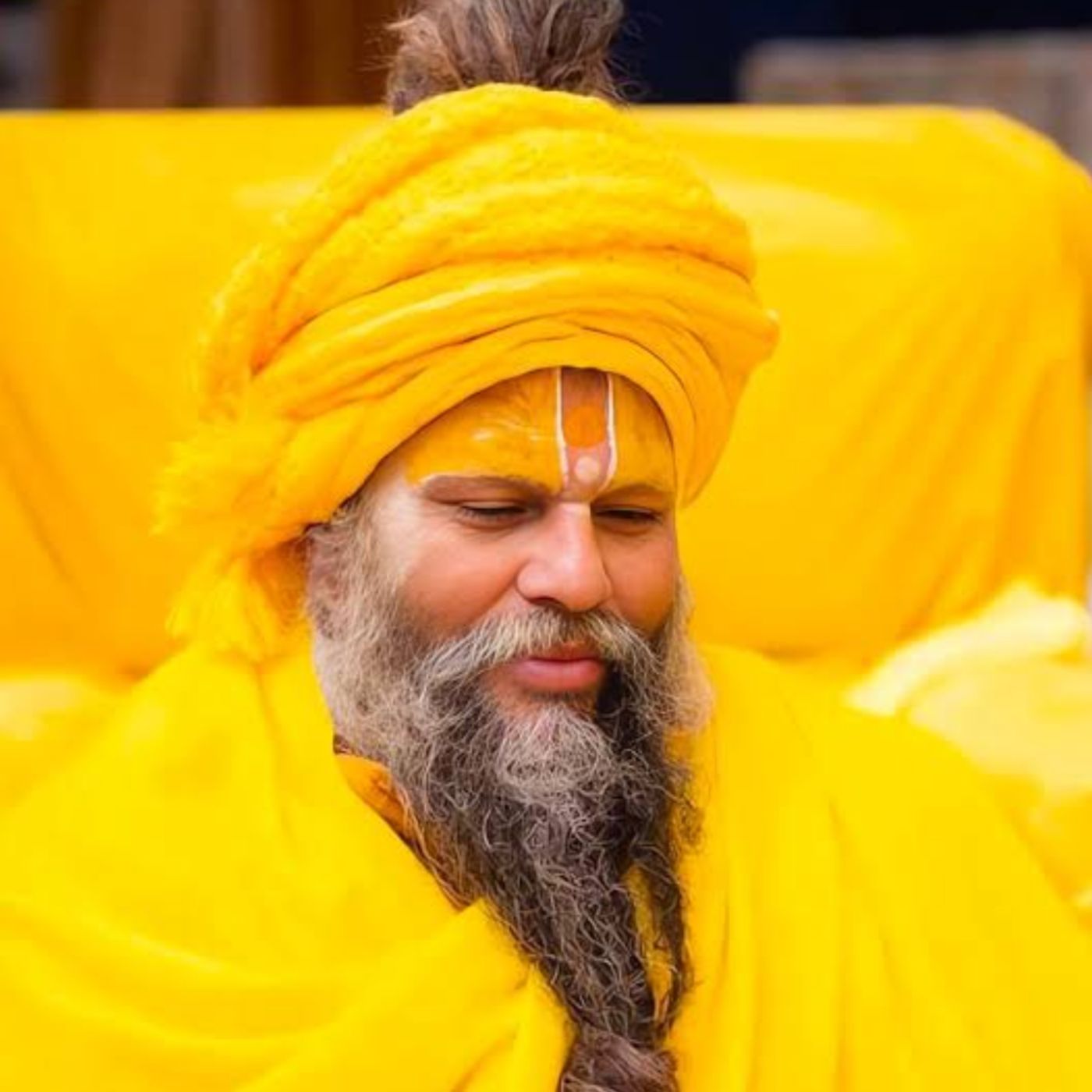
ये 3 बातें छोड़ कर सिर्फ ये एक काम कर लो पक्का सफल होंगे ! Sri Hit Premanand Govind Sharan Ji Maharaj

·46 min·4 clips
Prince Shudhanwa is thrown into a cauldron of boiling oil for defying the king's order, but his devotion protects him.
1. Ekantik Vartalap presents a satsang by Shri Hit Premanand Govind Sharan Ji Maharaj focused on the power of naam jap (name-chanting) as demonstrated through the story of Shudhanwa, son of King Hansadhwaj. 2. Maharaj Ji is the sole speaker delivering teachings in Hindi, drawing on Sanskrit verses and Bhagavatam stories to ground the discourse. 3. The episode's core thesis is that continuous chanting of God's name provides protection from both spiritual degradation and physical harm, as demonstrated through Shudhanwa's story. 4. Maharaj Ji opens by advising listeners to introduce relatives to naam jap, citing Pujya Bhaiji Maharaj's method of asking visitors to commit to chanting five garlands daily, through which 'lakhs of people were placed in the bhajan.' 5. He cites the Sanskrit verse 'Kaler Dosh Nidhe Rajan Astiheko Mahan Gunah' to establish that Kalyug's nature inclines people toward intoxication, gambling, violence, and theft, and that naam kirtan is the sole antidote. 6. The main narrative concerns King Hansadhwaj of Champapuri, whose son Shudhanwa is described as supremely devout, chanting Krishna's name continuously while also being an exceptional warrior. 7. When Yudhishthir's Ashwamedha Yagna horse enters Hansadhwaj's kingdom, the king orders his army to capture it, hoping the battle will bring him face-to-face with Lord Krishna, whose presence he had not seen. 8. Shudhanwa asks his mother for blessings before battle, telling her his ambition is to fight Arjun so fiercely that Lord Krishna himself will have to appear as charioteer — even if it costs him his life. 9. His new wife Prabhavati tells Shudhanwa that those who go to meet Shri Krishna never return, citing scriptural precedent, and asks only that someone remain to perform his last rites. 10. Shudhanwa delays departure to bless his wife, arriving late to the king's assembly, which triggers a death sentence: King Hansadhwaj orders him thrown into a cauldron of boiling oil for disobeying royal command. 11. The hostile court priests Shankh and Likhit, who had long resented Shudhanwa's devotion, confirm the sentence; even Shudhanwa's father upholds the order despite ministers' protests. 12. While being thrown into the boiling cauldron, Shudhanwa asks Krishna that his wish — to see the Lord and fight Arjun — be fulfilled before death. 13. Shudhanwa sits in the boiling oil with a calm expression, continuously chanting 'Shri Krishna,' while the oil fails to burn him; a coconut thrown as a test immediately explodes, proving the oil is genuinely scalding. 14. The priests Shankh and Likhit, whose bodies blister just from the splashing oil, repent publicly and jump into the cauldron themselves in shame; they survive because Shudhanwa's touch has made the oil favorable. 15. Maharaj Ji draws a parallel with Prahlad Ji being unhurt by serpents, cliffs, fire, and water, and with Hanuman's tail burning Lanka without harming Vibhishan's palace — all attributed to naam's protective power. 16. On the battlefield, Shudhanwa defeats multiple maharathis and then engages Arjun directly, cutting Arjun's flag, bowstring, and charioteer unconscious while chanting Krishna's name and laughing. 17. When Arjun invokes a Kaal-astra (death weapon) and Shudhanwa destroys it by chanting 'Jai Shri Krishna,' Lord Krishna himself reveals that Shudhanwa's combination of naam jap and one-wife vow (pativrata dharma of wife Prabhavati) is the source of his extraordinary power. 18. The battle concludes when Arjun invokes the accumulated merit of Ram's one-wife vow; even that boon-loaded arrow is cut by Shudhanwa, though its severed fragment cuts off Shudhanwa's head, fulfilling his wish to die in battle with a divine audience. 19. The episode is a narrative-heavy devotional teaching aimed at listeners who appreciate Bhagavatam story traditions; the pace is unhurried, with Sanskrit verses punctuating each narrative turn. 20. Listeners who need secular productivity or general wellness content will find the episode inaccessible.
Listen to the show on