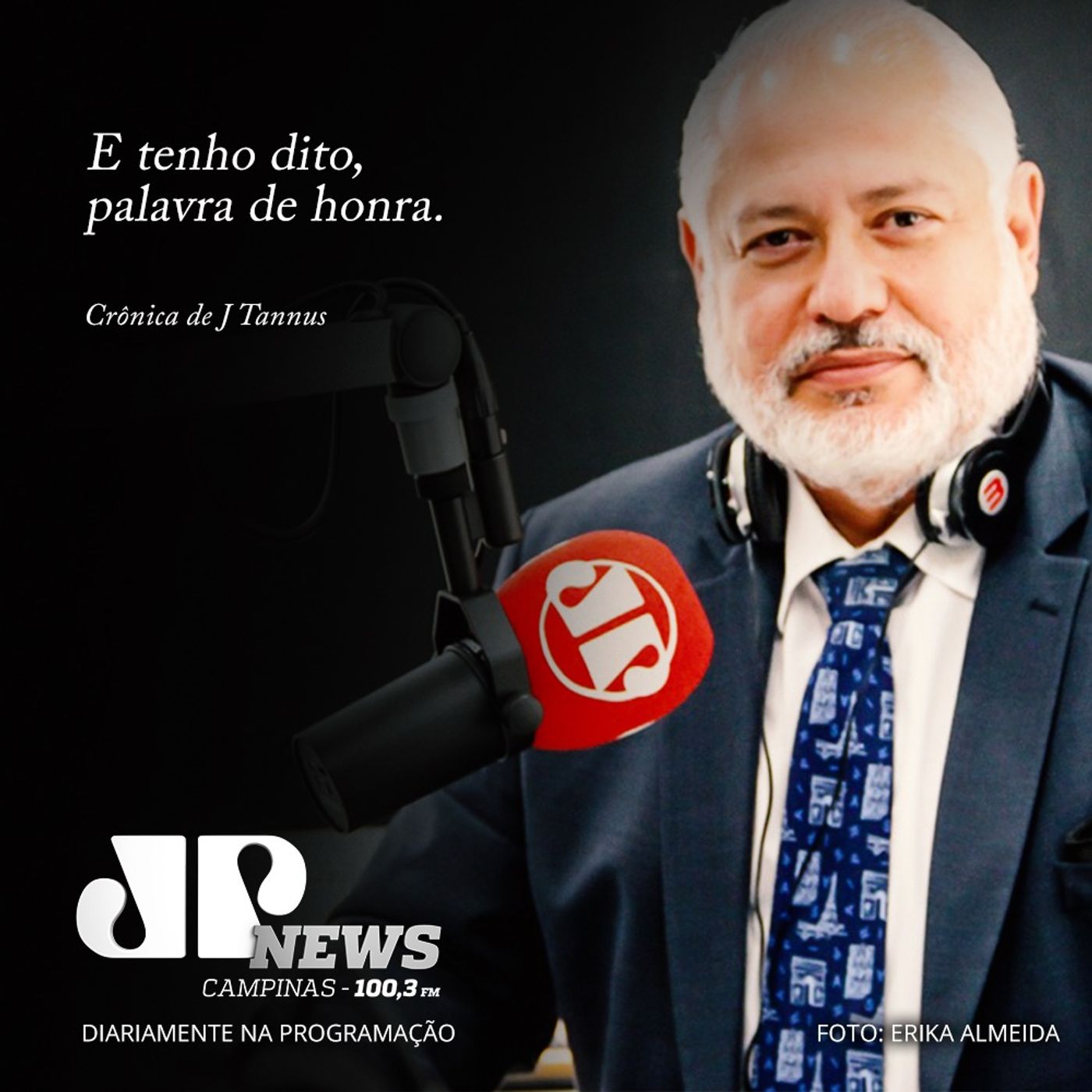
A mechanical engineer turned federal deputy reveals why Brazil's corruption scandals pushed him into politics.
1. Pan News Campinas host Jotatanus interviews former Federal Deputy Alexis Fontaine about his political experience with the Novo Party and his outlook on Brazil's 2026 elections.
2. Jotatanus serves as host and columnist on Pan News Campinas, presenting a satirical chronicle before the interview; Fontaine is a mechanical engineer turned entrepreneur turned politician with Belgian immigrant parents.
3. The episode asks why an entrepreneur with no political background entered federal politics and what he found frustrating about the Chamber of Deputies.
4. The opening chronicle frames ordinary Brazilians as the Count of Monte Cristo without a happy ending, imprisoned by fuel costs while Petrobras profits flow to shareholders described as 'modern barons.'
5. Fontaine grew up in Campinas, studied mechanical engineering in São Bernardo do Campo, and built a company in Sumaré before selling it and entering politics.
6. His entry point was entrepreneurial indignation: watching corruption scandals including Mensalão and Petrolão on television after 14-hour workdays while paying heavy taxes.
7. He built a YouTube channel about the difficulty of doing business in Brazil, which gave him public visibility before he had any party affiliation.
8. His 2018 campaign ran almost entirely through Facebook and WhatsApp, resulting in election as one of three Novo Party federal deputies.
9. The Novo Party grew from zero to 24 mayors across two election cycles, but lost momentum after João Amoedo positioned it in opposition to Jair Bolsonaro, dropping from eight to three federal deputies.
10. Fontaine's legislative agenda focused on tax reform, reducing the cost of doing business in Brazil, and creating a more competitive environment for job generation.
11. He argues that a deputy's real work is blocking bad bills, not just proposing new ones, citing absurd proposals such as mandating white paint on all walls to benefit paint manufacturers.
12. Fontaine states that of all Brazilian parties, only Novo and PSOL have genuine ideologies; the rest, including PT, are primarily vehicles for controlling parliamentary funds and party budgets.
13. The Novo Party refused parliamentary amendment budgets and special funds, which Fontaine says made them 'the fly in the soup' of the broader political establishment.
14. He describes 2026 as 'a dangerously risky year to legislate' because deputies will prioritize populist giveaways for electoral credit over any substantive national policy.
15. On the right-wing field, Fontaine notes that Tarcísio de Freitas declined to confront Jair Bolsonaro directly, which opened space for Flávio Bolsonaro as the main right-wing pre-candidate.
16. He describes the Banco Master scandal and INSS fraud as evidence of 'billionaire deviations' inside government institutions, contributing to public disillusionment with PT and Lula.
17. Kassab's strategy of consolidating dissident PSDB members and other party fragments is described as a political 'start-up incubator' offering candidates a path to election.
18. The tone is conversational and candid, mixing Portuguese and English; Fontaine speaks freely about corruption, ideological drift, and his own frustrated idealism.
19. Listeners interested in Brazilian federal politics, party dynamics, and the 2026 election cycle will find the analysis specific and experience-based.
20. Those seeking policy depth or economic analysis beyond electoral commentary may find the discussion too focused on personalities and party maneuvering.