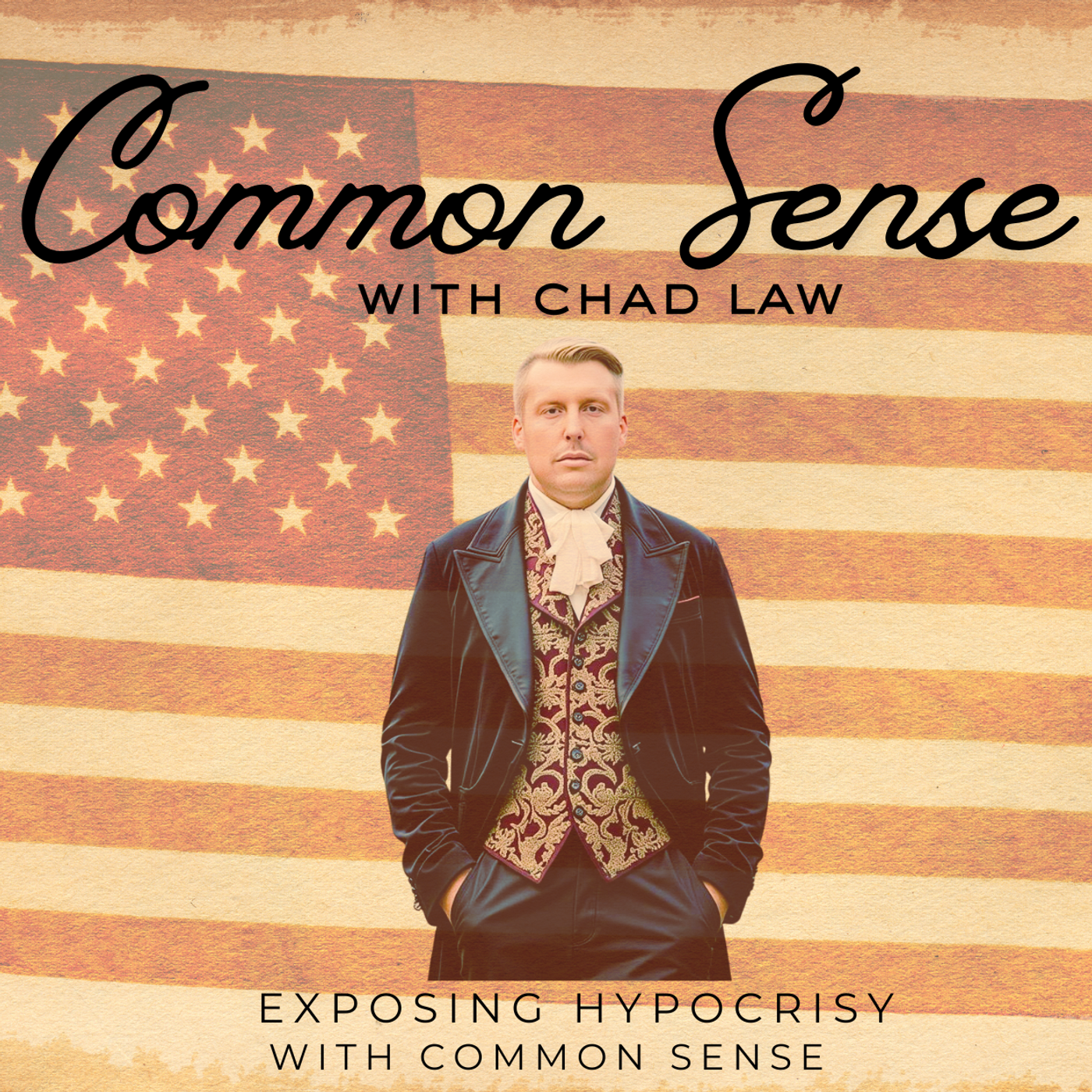
Common Sense with Chad Law | Political Commentary · Chad Law

Top 10 Wackiest Iran Conspiracies | Debunking the Internet's Iran War Madness

·51 min·3 clips
The internet supposedly solved the Iran conflict with anime avatars, fake war claims, and "Patriot Truth Warrior 1776".
Chad Law kicks off by saying he made the mistake of opening social media and ran straight into a fully formed Iran conspiracy machine. He jokes that the internet has already settled the conflict, while casually brushing past the Pentagon, the intelligence community, and diplomats. The joke works because people online are acting like they understand something far bigger than their own expertise. He says he started writing the claims down and ended up with a full list. That list becomes the spine for the segment. The countdown format gives the rant a clear path. He says the episode will run through the top 10 wackiest Iran conspiracies. One claim is that Iran is not actually a nuclear threat. Another says Israel secretly controls the United States. Another argues that Gulf states rented the American military like a short-term property. He also mocks the idea that Trump is planning war crimes and that the whole war might be fake. The point is not only that the claims are strange. It is that they are being piled together into one giant geopolitical fever dream. As the argument develops, he shifts from mockery to rebuttal. He brings up Iran’s proxy network across the Middle East, including Hezbollah in Lebanon, militias in Iraq, and the Houthis in Yemen. He says those groups have repeatedly attacked U.S. allies and American personnel. He also points to Iranian-backed militias being responsible for the deaths of hundreds of U.S. troops during the Iraq war. That history is used to argue that American policymakers are not just reacting to Israeli warnings. They are responding to 40 years of direct conflict. He makes the larger point that conspiracy narratives work by deleting context. If you erase decades of hostility, then a simple story becomes easier to sell. He says that is exactly how people end up with claims that Israel made the United States do it. From there he turns to the idea that the Israel lobby started the war. He frames that theory as a reboot of an old Iraq-war-era argument about neoconservatives and pro-Israel influence. He does not treat that theory as a fresh insight. Instead, he argues it repeats a familiar mistake: assuming one interest group controls the whole machinery of American foreign policy. He says that is not how the government works. He names the White House, Congress, the Pentagon, the intelligence community, the State Department, military alliances, security concerns, energy markets, trade routes, and domestic political debate. He stacks those institutions together to show how much larger the system is than one lobby theory allows. The host keeps the tone sharp and confrontational throughout. He leans on repetition to drive home what he sees as the obvious point. He uses the episode to argue that the internet loves simple explanations for complicated conflicts. He also makes clear that those explanations are dangerous because they flatten real history into a cartoon. The structure remains a countdown, but the real target is the habit of turning every foreign-policy debate into a secret-mastermind narrative. He closes by arguing that reducing international conflict to conspiracies does not make the world safer. It makes the conversation dumber. He says reality still exists, even when the internet pretends otherwise. He ends in the show’s familiar direct-to-listener style, with a call-in invitation and the repeated claim that common sense is rare. The whole segment is built as a fast, combative monologue that treats internet mythmaking as the thing to beat back.

As heard by us

A loud, direct takedown of Iran conspiracy theories with a clear countdown structure.

Chad Law gives Wacky Wednesday a brisk, combative run through Iran conspiracy claims, opening with a swipe at the idea that social media has already solved the conflict and then working through the top 10 theories.

Read the full review in PlayNext →

Why you'd press play

If you want a hard-edged tour of Iran conspiracy theories, start here.

Read the full recommendation in PlayNext →
Listen to the show on