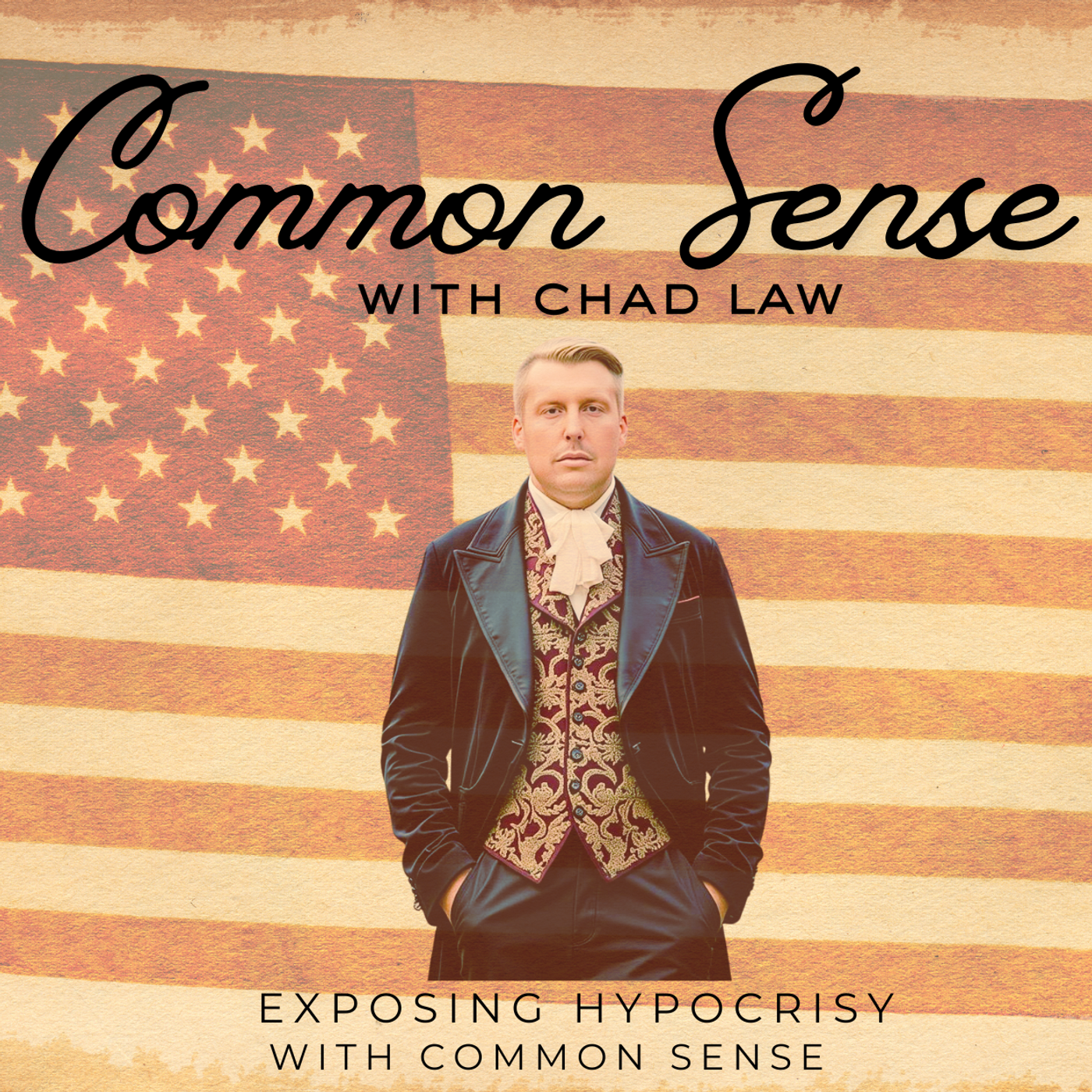
Common Sense with Chad Law | Political Commentary · Chad Law

They Said It. Then Erased It. | Throwback Thursday Exposes Democrat Narrative Shift

·54 min·3 clips
Obama framed immigration around enforcement, deportation, and 'Felons, not families.'
1. Common Sense with Chad Law centers this Throwback Thursday episode on Democrats' shifting positions on crime, marriage, and immigration. 2. Chad Law is the host and solo narrator, and he frames the segment as a record check on what politicians said then versus now. 3. The episode asks whether modern political certainty depends on erasing older Democratic positions from public memory. 4. On crime, he plays a Democratic-era clip about "the streets of America" and the need to "actually enact a crime bill." 5. He says the 1994 crime bill was openly sold by Democrats as a response to violence, gangs, and drug dealers. 6. He argues that language like "super predators" would now be treated as politically radioactive, even though it was once mainstream. 7. He links that past posture to the claim that order and policing were once defended as responsible politics. 8. He says the current framing flips the labels by treating consequences as cruelty and enforcement as suspicion. 9. On marriage, he quotes Bill Clinton saying "marriage is the union between a man and a woman." 10. He identifies the Defense of Marriage Act, DOMA, as a law signed by Clinton with bipartisan Democratic support. 11. He argues that the episode's most revealing pattern is not disagreement, but the absence of any public reckoning for the reversal. 12. On immigration, he quotes Barack Obama on "undocumented immigrants" and the line "Felons, not families. Criminals, not children." 13. He says those words show that enforcement-first immigration language was once standard inside mainstream Democratic politics. 14. He adds that Obama's years produced millions of deportations, which made the contrast with current rhetoric sharper. 15. Across all three issues, he returns to the same accusation: positions are abandoned, then denied, then replaced without acknowledgment. 16. He says the media helps by moving forward with the new framing instead of repeatedly asking who built the old system. 17. The tone is confrontational, sarcastic, and heavily performance-driven, with repeated analogies about restaurants, gyms, pools, and costume changes. 18. The format is a solo monologue with long quote stacks, commentary breaks, and explicit transitions between policy areas. 19. Listeners who follow political history and message shifts will get the most out of this episode. 20. Listeners seeking nonpartisan policy analysis or a calm interview may skip it.

As heard by us

A sharp, fast argument about how an old DOMA clip challenges today's political memory.

This episode turns an old DOMA clip into a pointed case that Democrats were once willing to defend one position and later treat a different one as the only acceptable account. It stays on what was said on camera, who backed DOMA, and how the story changes when the incentives do.

Read the full review in PlayNext →

Why you'd press play

If you want one old political clip spun into a full indictment of how memory gets edited.

Read the full recommendation in PlayNext →
Listen to the show on