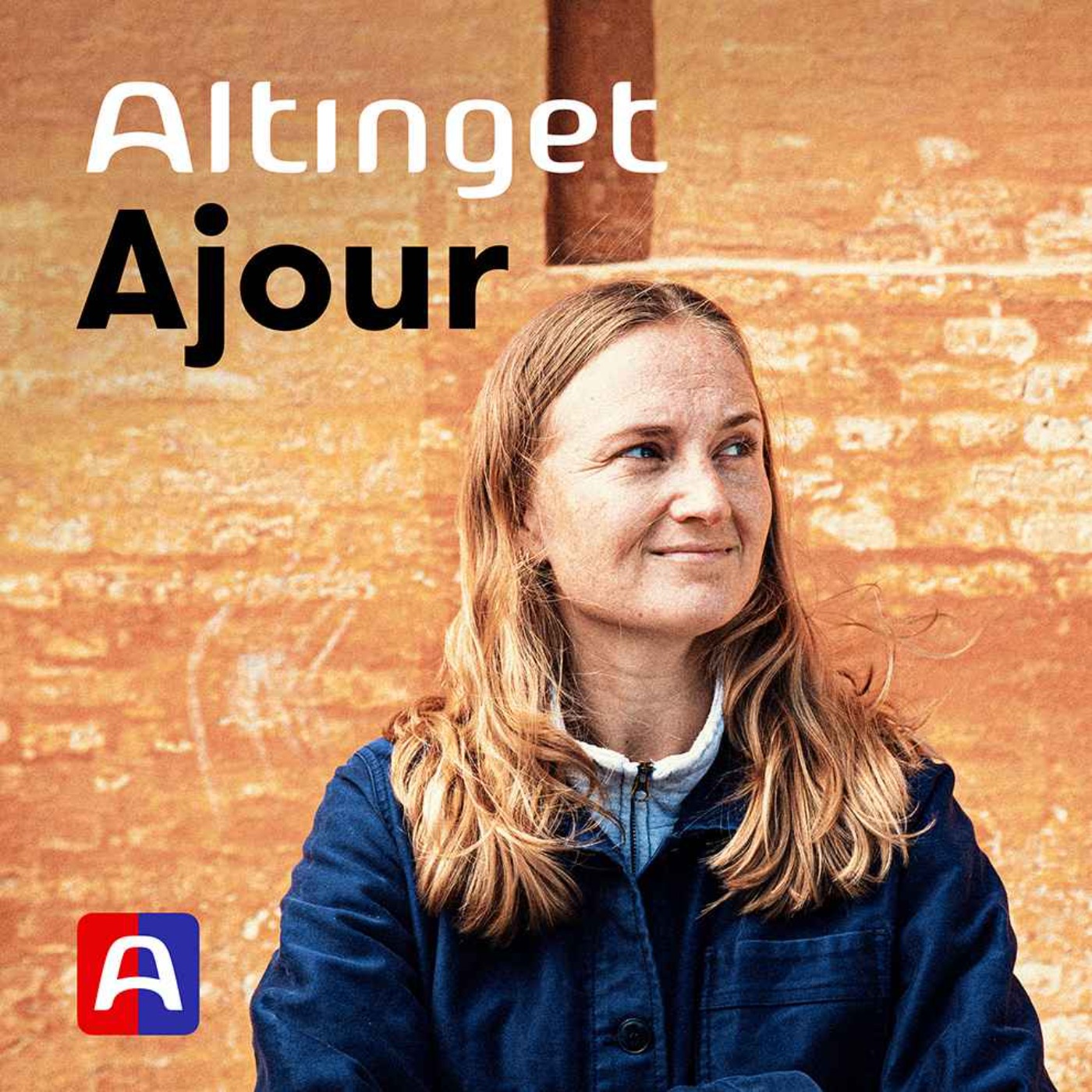
Altinget Ajour · Altinget

Midt i sit kræftforløb skal Marie løfte almindelige unges trivsel

·25 min·1 clip
Marie explains why she kept attending the Trivsel Commission from a hospital bed: 'You don't stop being a person just because you get sick.'
1. Altinget Ajour profiles Marie Holt Hermansen, 19, the youth representative on Denmark's Trivsel Commission, who continued the role while undergoing treatment for aggressive leukemia. 2. Reporter Mathilde Briel Lundt interviews Marie at her home in Odense, where Marie is still recovering and unable to attend the Altinget offices in Copenhagen. 3. The episode's core question is how a young person fights for the well-being of 'completely ordinary Danish young people' while her own life is threatened by a life-threatening disease. 4. Marie was diagnosed with leukemia in September after a blood test she arranged when she had been ill for two weeks and had a fever; the evening of the test she had planned to attend a party and had been to the gym the previous day. 5. A guard called to tell her a car had been sent because the clinic could not reach her and her blood results required immediate attention. 6. The treating doctors told her she had an aggressive form of leukemia and could not promise with 100% certainty that the treatment would succeed; they told her a bone marrow transplant would be required and the process would take a year. 7. She received multiple chemotherapy rounds followed by a bone marrow transplantation in which donor blood-containing stem cells were introduced to replace her diseased cells. 8. For five weeks after the transplant Marie was kept in a hospital room isolated from her mother because immunosuppressive medication made external bacteria and viruses potentially life-threatening. 9. After discharge she was readmitted several times with post-transplant side effects, and during this period she followed the second year of high school remotely and tried to maintain friendships within a restricted social bubble. 10. The Trivsel Commission was established to investigate youth well-being in Denmark and published a report in February 2025 containing 35 recommendations, including raising the minimum age for smartphone ownership, expanding opportunities for voluntary association participation, and rethinking the character grading scale. 11. On the commission's character-scale proposal Marie privately acknowledges to the reporter that young people will still drink at end-of-school events regardless of recommendations, noting 'you can talk as much about alcohol limits as you want.' 12. She characterises the commission's most important message as 'it is okay not to be tip-top all the time,' arguing that labelling youth unhappiness a 'crisis' risks stigmatising ordinary negative emotions. 13. Marie continued attending commission meetings because the role provided self-efficacy and identity continuity: 'you don't stop being a person just because you get sick.' 14. She recalls a nurse setting up a blood transfusion line outside a hospital room while she simultaneously prepared for a live media appearance about the commission's work. 15. She chose not to be present for the public release of the February report because of her health, calling it 'the most boring thing' given how much time she had invested. 16. In a German class assignment that asked students to write the sentence 'tell me that you are alive,' Marie found the task 'wildly surrealistic' because she had written it close to her bone marrow transplantation, when her survival was genuinely uncertain. 17. The interview is conducted as a quiet, intimate home visit with ambient domestic details — a cat named Nina, a dining table — lending it a documentary tone. 18. The reporter gives Marie extended space to narrate her illness chronologically and then link it back to her policy work, creating a clear structural rhythm between personal and public themes. 19. Listeners who engage with youth mental health policy, personal illness narratives, or Danish social politics will find this episode substantive. 20. Listeners looking for data-heavy policy analysis or who prefer English-language content will note this episode is predominantly in Danish context, though the version here is translated.
Listen to the show on